Two announcements moved through Pasadena's development pipeline within days of each other this August. One was a condo release. The other was a Design Commission hearing. Read separately, they sound like good news for anyone thinking about trading a longtime family home for something smaller. Read together, they show something most downsizing guides skip past: Pasadena is adding housing at both ends of the size spectrum right now, and neither end offers a practical ownership option for most downsizers.
That gap matters more than the median price gap everyone already quotes.
The Luxury End: What a New Condo Release Actually Costs
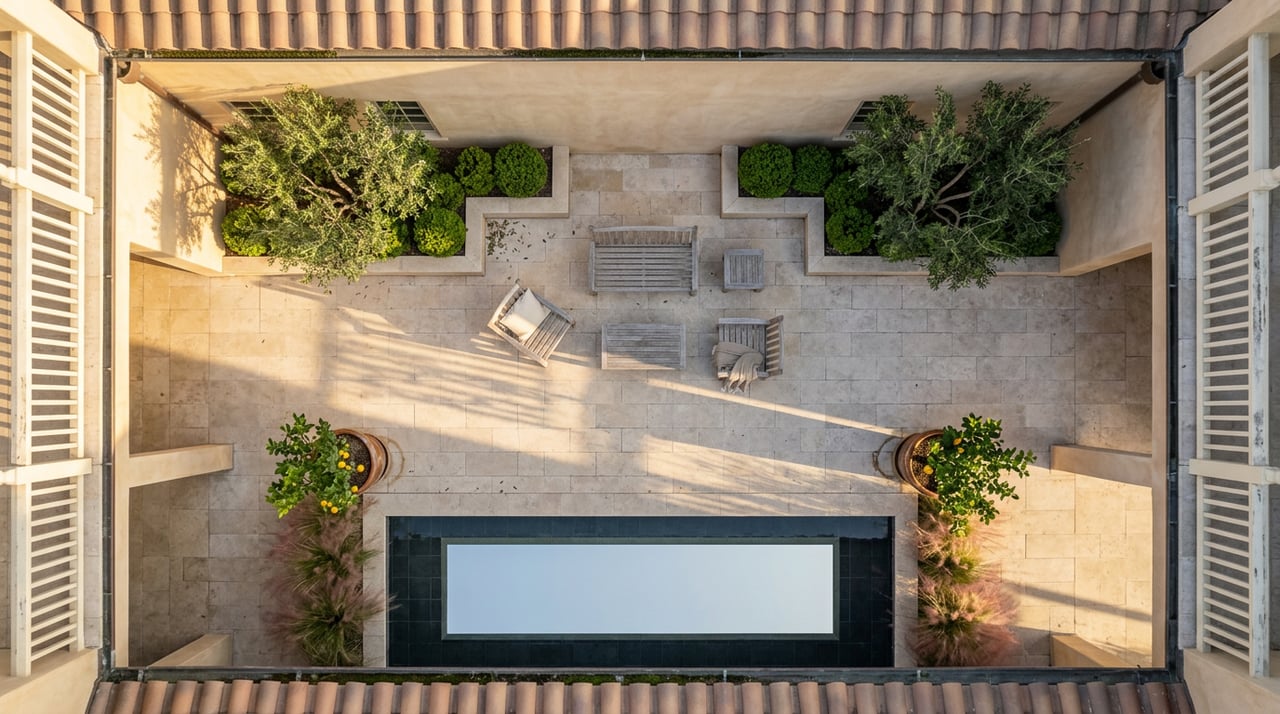
According to Urbanize, forty-nine new condominiums went up for sale at 127 N. Madison Avenue in Playhouse Village on August 25. The building, called The Madison, is a five-story project designed by the Los Angeles architecture firm Struere and built by Toledo Homes, with units sitting above subterranean parking around a central courtyard, plus a rooftop deck, an amphitheater, and a putting green. Prices range from $1.5 million to $2.7 million for units between 1,036 and 1,856 square feet. One listed unit, a two-bedroom at 1,568 square feet, is priced near $1.9 million, which works out to roughly $1,212 per square foot.
It is being described as the largest single batch of new condominiums Pasadena has brought to market in years, which is true, and it is a real option for a downsizer selling a high-value single-family home who wants to stay in Pasadena without the maintenance of a house. But it is not the answer for most people going through this decision. A downsizer moving out of a $1.2 million or $1.4 million home, which is close to Pasadena's typical single-family price point right now, is not going to net enough from that sale to comfortably step into a $1,200-a-foot new build. The Madison solves the downsizing problem for a narrow slice of sellers at the top of the market. For everyone else, it is a headline, not an option.
The Other End: New Units, No Deed
At the same time The Madison was listing, a very different kind of housing was working its way through Pasadena's Design Commission. According to Pasadena Now, commissioners held a preliminary consultation on August 11 on a proposal from DDI 540 S. Lake LLC for a five-story building at 540 S. Lake Avenue, a few blocks west of Caltech. The plan calls for 71 apartments reserved entirely for senior independent living, above parking for 89 vehicles and a small amount of ground-floor retail. The site currently holds four detached one-story commercial buildings dating to 1953 and the late 1990s, and the project still needs Concept and Final Design Review from the Design Commission and a Certificate of Exception from the Hearing Officer before it can move forward. This was a preliminary consultation, not an approval. There is no move-in date attached to it.
Pasadena Now also reported that a separate developer has proposed an 80-unit senior living facility at Lake Avenue and Walnut Street, on the site of the former Conrad's restaurant, split between 50 assisted living units and 30 memory care units. That project has been through its own design revisions since it was first proposed, and as of this year it was still described as undergoing a design refresh rather than moving toward construction.
Here is the detail that changes the story: both of these projects are apartments. Independent living and assisted living communities in California are almost always structured as rentals, not condominium ownership. A homeowner who sells a paid-off house and moves into one of these buildings is not converting home equity into a smaller owned asset. They are converting it into a monthly rent check, and the building itself belongs to someone else. That can be the right choice for someone who needs on-site care or wants to shed every homeownership responsibility, but it is a fundamentally different financial move than downsizing into a condo you own.
So the two biggest housing stories in Pasadena's development pipeline this year sit at opposite extremes, and neither one is built for most people trying to sell a house and buy a smaller house with the difference.
| Housing tier | Example | Price point | Ownership structure | What happens to your equity |
|---|---|---|---|---|
| New luxury condos | The Madison, 127 N. Madison Ave. | $1.5M to $2.7M | Fee-simple condo ownership | Transfers in full, if your sale nets enough to afford it |
| New senior housing | 540 S. Lake Ave. (71 units, in design review) and the former Conrad's site on Walnut St. (80 units, in design review) | Not yet set; still in entitlement | Rental apartment, no deed | Converts to monthly rent, not an owned asset |
| Existing resale condos | Citywide condo stock | Median $810,000, Q1 2026 | Fee-simple ownership, subject to HOA dues | Most direct path to keeping equity as real property |
The Lane Most Downsizers Actually Use
That leaves the resale condo market, which is where the real downsizing math happens for most Pasadena sellers, and where it gets less attention than it deserves.
In the first quarter of 2026, Pasadena's median single-family home sold for $1.4 million, while the median condo sold for $810,000, according to PropertyShark's market data. That gap is the number every downsizing conversation eventually lands on. What gets skipped is what sits inside that condo median. Pasadena's housing stock skews old. City planning documents place roughly half of the residential base in multifamily buildings, and a large share of the total housing stock, condos included, predates 1980. That means a buyer choosing between condo listings is often choosing between eras of construction as much as between square footage, and that shows up directly in monthly HOA dues.
Two real listings from this year illustrate the range. A 1,250-square-foot, two-bedroom unit carried a $560 monthly HOA. A larger 1,681-square-foot unit, also two bedrooms, carried an $895 monthly HOA that covered water, trash, electric, gas, earthquake insurance, a pool, and grounds maintenance. Other Pasadena listings this year advertised HOA dues in the more typical $400 to $500 range as a selling point, specifically because so many buildings in the city run higher. A downsizer comparing two condos at similar list prices can end up with a $300 to $400 monthly cost difference once HOA dues are factored in, which is a meaningful gap when the whole point of downsizing is to lower monthly overhead, not just the purchase price.
This is the part of the market that actually determines whether downsizing frees up cash flow or just moves the expense column around. A smaller unit with a low HOA in an older, well-run building can beat a larger unit with a high HOA in a newer one, even at the same sale price. The building's reserve fund, its age, and what the HOA fee actually covers matter more than the square footage on the listing.
What This Means If You're Deciding Now
If you are weighing a move out of a longtime Pasadena home, the headlines about new construction are worth knowing but not worth waiting on. The Madison is real inventory today, priced for a specific kind of seller. The senior housing projects on Lake Avenue are still moving through design review, with no confirmed timeline, and even once built they will not offer ownership. The actual decision most people are making right now happens inside the existing resale condo market, where the real variables are the age of the building, the size of its reserve fund, and what its HOA dues actually cover.
Before touring anything, it helps to ask for:
- The HOA's current monthly dues and what services they include
- Whether the building has a funded reserve study or a history of special assessments
- The building's age and the timing of its last major system replacement, such as roofing, plumbing, or elevators
- Recent comparable sales in that specific building, not just the neighborhood
Frequently Asked Questions
Are any of the new senior housing units in Pasadena available to buy?
Not at this stage. Both projects currently in the pipeline, the 71-unit building proposed for 540 S. Lake Avenue and the 80-unit assisted living and memory care building proposed for the former Conrad's site on Walnut Street, are structured as rental apartments. Neither offers condominium ownership, and both are still working through Pasadena's design and entitlement process.
Is The Madison a realistic option for someone downsizing from a typical Pasadena home?
It depends heavily on what you are selling. At $1.5 million to $2.7 million, The Madison is priced closer to Pasadena's higher-end single-family sales than to its median. It is a legitimate option for someone selling a larger or more valuable property who wants to stay local without house maintenance, but it is not sized for the median seller.
What is the biggest financial risk in an older Pasadena resale condo?
Underfunded reserves. An HOA with low dues can look attractive until a major repair, like a roof or elevator replacement, triggers a special assessment that catches owners off guard. Asking for the reserve study and assessment history before writing an offer is the single most useful thing a buyer can do.
Pasadena's downsizing conversation is more complicated than a median price gap, and the buildings going up around the city right now prove it. If you are trying to figure out which lane actually fits your situation, whether that means a resale condo, a wait-and-see on new construction, or something else entirely, Laurie Turner can walk through the specifics with you.
This article is general information, not legal, tax or financial advice. Consult a qualified professional about your situation.